


10 Things Kids Should See in Arches National Park

Arches National Park isn’t just a place to look at rocks, it’s a giant outdoor science classroom.
Every arch, canyon, and balanced rock tells a story about erosion, weather, time, and the incredible forces that have shaped the Colorado Plateau.
If you’re exploring Arches with kids, these are ten places and experiences I would put on your family adventure list.
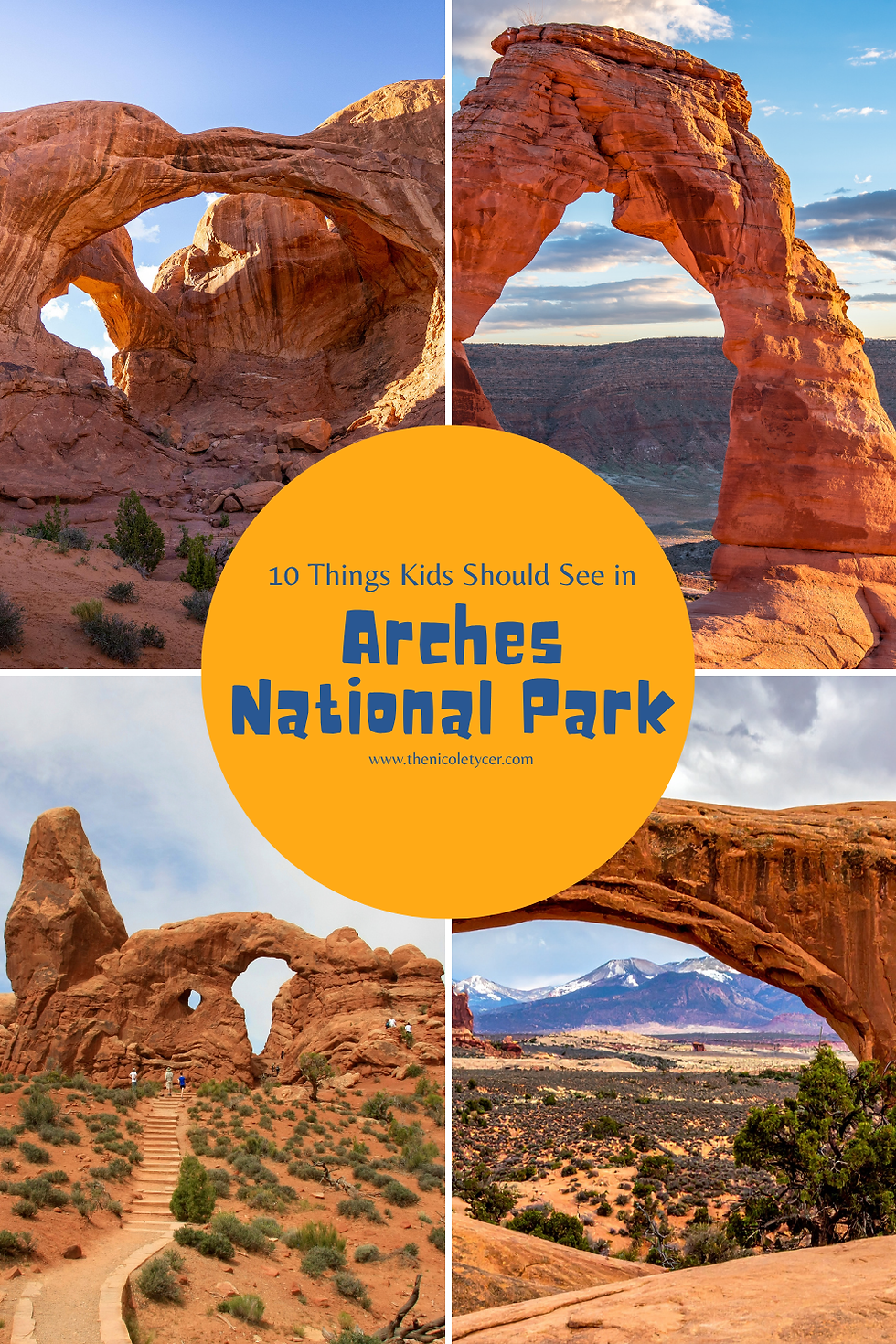
1. Delicate Arch, Arches National Park
Of course, you can’t talk about Arches without talking about Delicate Arch. Kids can learn how wind, water, ice, and time slowly shape sandstone. If the 3-mile hike isn’t right for your family, the viewpoints offer ways to see the famous arch without completing the full trail.

2. The Windows
North Window, South Window, and Turret Arch are packed into one spectacular area. It’s a wonderful place for kids to see several different arches in a relatively small area. The Windows Section is located 12 miles from the park entrance. The Massive North Window is visible from the parking lot. Trails lead to Turret Arch, North Window, South Window, and Double Arch. Limited oversize parking is available at the lower lot near Double Arch. Toilets are open year-round. There is no drinking water available at the trailhead.

The Windows Section is considered by some to be the beating heart of Arches National Park. In just over two square miles you'll find multiple awe-inspiring expanses. It's an easy hike for the kids and a short portion of the trail is handicapp accessible for wheelchairs. The area contains a large concentration of arches and is one of the most scenic locations in the park. Other named features in this area include Garden of Eden, Elephant Butte, and Parade of Elephants.
3. Double Arch, Arches National Park
Double Arch looks like something from a fantasy movie; and it’s a great place to ask kids, “How do you think this formed?” Surprisingly, it's the tallest arch in the park. Double Arch is in The Windows Section and the area contains a large concentration of arches and is one of the most scenic locations in the park.

4. Balanced Rock
Balanced Rock, also known as "a Teetering Giant" is a perfect geology lesson, one of the most iconic features in the park, stands a staggering 128 feet (39m) tall. It may look as if the enormous boulder is magically balanced, but it’s actually attached to its pedestal. The slick rock boulder of Entrada Sandstone sits attached to its eroding pedestal of Dewey Bridge mudstone. Eventually, erosion will change the formation forever and the 3,600 ton boulder will come tumbling down as the erosional process continues to shape the landscape. In the winter of 1975-76, Balanced Rock’s smaller sibling “Chip-Off-the-Old-Block” collapsed, proving that there is no better time than the present to see this awe-inspiring giant.

5. Park Avenue
Look up at the towering sandstone formations and challenge kids to find shapes, faces, animals, or buildings in the rocks. A paved sidewalk leads to a viewpoint down a corridor of towering rock walls and curiously carved spires. Descend stairs to walk the trail among massive monoliths toward Courthouse Towers Viewpoint one mile away.

6. Landscape Arch, Arches National Park
Landscape Arch is one of the park’s most spectacular natural arches. It is a great opportunity to talk about how erosion continues to reshape the landscape. Landscape Arch is located in the Devils Garden area: a region at the northern end of the park, 18 miles from the park entrance. Toilets at the trailhead are open year-round. Drinking water is available spring through fall. This trailhead offers a range of hiking experiences, from easy to strenuous. Here you’ll find arches, spires, and a large concentration of narrow rock walls called “fins.” Fins form when rainwater erodes parallel fractures caused by the uplift of salt deposits below the surface.

Landscape Arch is the longest arch in North America with a light opening of 306 feet.This awe-inspiring expanse is only 6 feet (1.8 meters) in diameter at its narrowest. Large segments of the arch came crashing down in the 1990s, proof that the park’s landscape can change dramatically in a instant. Now is the best time to see Landscape Arch in person.
7. Sand Dune Arch
This short adventure combines soft deep sand, towering rock walls, and an arch hidden among the sandstone. Kids often love the feeling of discovering something tucked away. You may also choose to continue across a grassland to Broken Arch, returning via the same trail or making a loop through the campground.

8. Devils Garden
For families ready for more exploration, Devils Garden offers arches, fins, and interesting rock formations. Even a shorter visit gives kids plenty to investigate. One of the premier locations in the park. Here you’ll find arches, spires, and a large concentration of narrow rock walls called “fins.” Fins form when rainwater erodes parallel fractures caused by the uplift of salt deposits below the surface.
9. Wolfe Ranch and the Petroglyphs
Near the Delicate Arch area, kids can see evidence of both more recent human history and much older Indigenous cultural history. The Wolfe Ranch, also known as Turnbow Cabin, is located in Arches National Park near Moab, Utah, United States. John Wesley Wolfe settled in the location in 1898 with his oldest son Fred. A nagging leg injury from the Civil War prompted Wolfe to move west from Ohio, looking for a drier climate.

The Petroglyphs show images of how horses were used by Ute Indians from the mid 1600s changed how they hunted, worked and travelled. The Wolfe Ranch Petroglyph panel is along the Petroglyph Interpretive Trail, which is a very short detour on the Delicate Arch Trail about 0.25 miles from the Wolfe Ranch and Delicate Arch parking area. The trailhead is about 13 miles or a 25min drive from the Arches National Park entrance station.
10. The Night Sky
Turn your visit into a science lesson after sunset. Look for constellations and talk about why national parks like Arches are special places for experiencing dark skies. The national parks and monuments of the Colorado Plateau have long been popular destinations for travelers. In addition to their stunning landscapes and rich cultural history and they share some of the darkest skies remaining in the contiguous 48 United States.

The darkness of a moonless night at Arches surprises many visitors. As few as one in ten Americans (only 20% of Americans have seen the Milky Way) lives in an area where they can see the estimated 2,500 stars that should be visible under normal conditions.
Make this outing a learning adventure: Ask your kids to choose one arch and draw what they think it looked like 10,000 or 100,000 years ago.
Want to take the adventure even further?
Discover the science, stories, and secrets behind 16 incredible parks in the book: For the Love of the Parks: Southwest Region: The Science, Stories, and Secrets of 16 National Parks.
Whether you're planning your next road trip, exploring with your family, or bringing the national parks into your homeschool, there's always more to discover.
Explore the parks. Ask questions. Find your adventure.


Comments